Major Heat
Overview
Major Heat is the 12th solar term in the traditional Chinese solar calendar. This period is recognized as one of the hottest times of the year in China, with extreme heat prevailing across most parts of the country. The 24 solar terms, a system created thousands of years ago in China, serve as a guide for agricultural activities and have been crucial in shaping Chinese cultural and daily practices. Despite technological advancements, the relevance of these solar terms persists, providing guidance for dietary choices, cultural rituals, and lifestyle adjustments.
Climate and Weather Patterns
During Major Heat, crops benefit from the abundant sunlight, high temperatures, and heavy rainfall, which are ideal for growth. However, this period can also bring natural disasters such as floods, droughts, and typhoons, posing risks to agriculture. Therefore, timely harvesting and planting are essential to mitigate the adverse effects of these calamities. The solar term acts as an important indicator for farmers to engage in activities that ensure the protection and productivity of their crops.
Cultural Significance and Traditions
Major Heat is associated with a rich tapestry of cultural traditions across various regions in China. One notable custom is the "Sending the Major Heat Ship," a ritual practiced in Taizhou, Zhejiang province. This tradition involves creating a ship filled with sacrificial animals like pigs and chickens, which is then paraded through the streets with music and fireworks. The ship is finally burned at sea as a prayer for good harvests and health.
In addition to rituals, Major Heat is a time for engaging in leisurely activities such as cricket fighting, a pastime that dates back to the Tang Dynasty (618-907).
The Major Heat also influences lifestyle activities as people find ways to cope with the intense weather. Traditional beliefs emphasize the importance of maintaining a balanced diet, avoiding excessive consumption of cold and raw foods to protect the digestive system. There is also an emphasis on mental well-being, with recommendations to slow down and maintain a positive mood as the heat peaks.
Health Practices
The Major Heat period sees a variety of foods integrated into daily diets, believed to counteract the intense heat and maintain health. In Putian, Fujian province, there is a custom of eating litchi and mizao. Litchi, rich in glucose and vitamins, is often soaked in cold well water before consumption, while mizao, made of fermented rice and cooked with brown sugar, is said to boost vital energy.
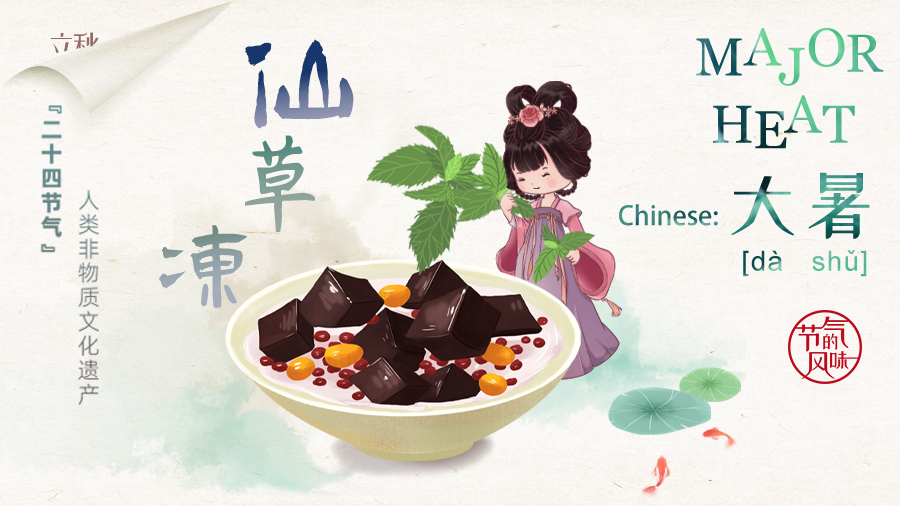
In Shandong province, mutton soup is a popular dish, offering nourishment and believed to provide relief from the heat. Grass jelly, known as xiancaodong, is another favored refreshment, celebrated for its cooling properties and described in Guangdong province as a means to "stay young like the immortals." Article reference1. 7 things you may not know about Major Heat. seeyangzhou.com. 20232. The heat is on. chinadaily.com.cn. 20223. The Twenty-Four Solar Terms. chinaservicesinfo.com. 2018Photo Gallery(3 pictures)CategoriesLifestyleTag24 Solar TermsRelatedStart of Autumn24 Solar TermsDance of 24 Solar TermsCricket FightingCatalogue1. Overview2. Climate and Weather Patterns3. Cultural Significance and Traditions4. Health Practices- - - []








